

By JERRY ZEHR
Guest Columnist
 Recent comments by Indiana Lieutenant Governor Micah Beckwith about Islam have prompted me to speak up.
For more than 35 years, I have been involved in interfaith work in Indiana. During that time, I have shared meals with Muslims, visited mosques, worked together on community projects, stood together at public events, and developed friendships that have enriched my life and broadened my understanding of faith.
Because of those experiences, I struggle when I hear broad claims made about Islam that simply do not reflect the Muslims I know.
One of the recurring claims is that Muslims seek to impose Sharia law on America. Yet after decades of relationships with Muslim communities, I have never encountered Muslims in Indiana advocating for replacing the Constitution with religious law. The Muslims I know value religious freedom, democratic government, freedom of speech, and the right of every person to practice their faith according to their conscience.
Part of the confusion comes from the word “Sharia” itself.
For many Muslims, Sharia is not primarily a political system. It is a spiritual and moral framework that guides personal conduct. It includes prayer, fasting, charitable giving, honesty in business, care for family, and compassion for neighbors. In that sense, it is not unlike the way observant Jews follow kosher practices or the way Christians seek to order their lives according to the teachings of Jesus.
It is also important to remember that the Muslim world is not monolithic. Not all Muslim-majority countries govern themselves according to strict interpretations of Islamic law. Countries such as Turkey, Albania, Kosovo, and Kazakhstan maintain largely secular legal systems. Like Christianity, Islam encompasses a wide range of beliefs, cultures, and interpretations.
Critics often point to extremists as evidence of what Islam teaches. But every religious tradition has individuals and groups who distort its teachings. Christians would not want their faith judged solely by the Crusades, the Inquisition, or acts of violence committed in the name of Christianity. Muslims deserve the same fairness.
The Qur’an contains passages that many Americans would find deeply familiar in their concern for human dignity and peaceful coexistence.
“There shall be no compulsion in religion” (2:256).
“We created you from a male and a female and made you peoples and tribes that you may know one another” (49:13).
“Whoever saves one life, it is as if he has saved all humanity” (5:32).
These verses do not erase the complexity of Islamic history, any more than the Sermon on the Mount erases the complexity of Christian history. But they do remind us that Islam, like every major faith tradition, contains teachings that call people toward compassion, justice, mercy, and respect for others.
The Prophet Muhammad was both a spiritual leader and a community leader. That historical reality is often cited as proof that Islam is inherently political. Yet history is more complicated than slogans. What matters most is how people practice their faith today. The Muslim Americans I know are not seeking domination. They are seeking the same things most of us seek: meaningful work, safe communities, opportunities for their children, and the freedom to worship according to their beliefs.
At a time when fear is often amplified and misunderstanding spreads quickly, we need fewer stereotypes and more relationships.
One of the great lessons I have learned through interfaith work is that it is difficult to fear people once you know them. Conversations replace assumptions. Friendships replace suspicion. Shared meals replace caricatures.
As Americans, we do not have to agree with one another’s theology. We do not have to believe the same things. But we should strive to speak truthfully about one another.
Religious liberty is strongest when we defend it not only for ourselves, but also for our neighbors.
In the end, the question is not whether we agree about religion. The question is whether we are willing to see one another as fellow human beings, worthy of dignity, respect, and understanding.
That is not only an American value.
It is a deeply spiritual one as well.
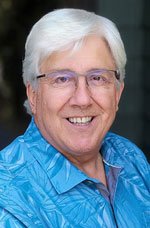
Jerry Zehr of Carmel is a respected author, speaker, and retired minister with over 35 years of experience in pastoral leadership and interfaith initiatives.