
Submitted
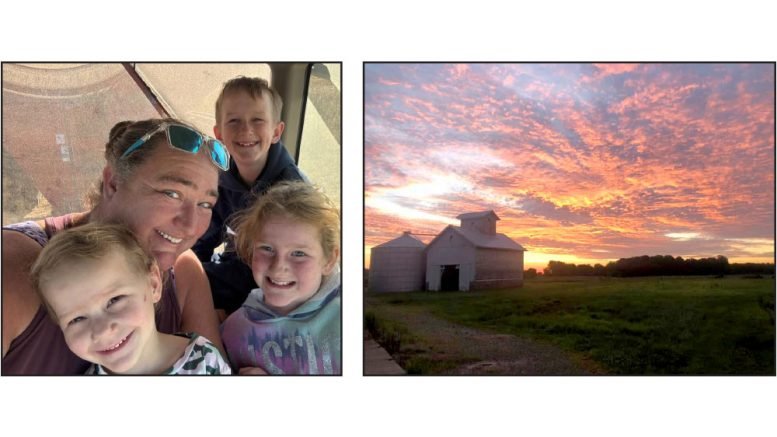
When Amanda Egler sits on the porch swing at her Hamilton County home, she can look across the same farm where generations of her family have lived and worked.
“There are pictures of me in the front yard as a little kid,” she said. “Now my grandkids are here, sitting on the porch swing that I sat on with my grandpa.”
As a fifth-generation farmer and co-manager of W. Lee Egler Farms, Amanda helps oversee approximately 1,800 acres of corn and soybeans in Hamilton County. But her path back to the farm was anything but traditional. After earning a degree in biology, Amanda spent years working as a hydrologist and environmental scientist with the U.S. Geological Survey. Her career took her from Indiana to California before family circumstances eventually brought her home. Rather than leaving that experience behind, she brought it back to the farm.
“A lot of farmers around here have ag degrees,” Amanda said. “I don’t have that. I have a background in looking at data, looking at numbers, and figuring out what the data really says.”
Today, Amanda applies that analytical mindset to farming while continuing a family tradition of conservation leadership. Her grandfather supported local conservation efforts, her father served on the Hamilton County Soil and Water Conservation District board and helped transition the farm to no-till practices decades ago, and Amanda now serves on the SWCD board herself.
The operation utilizes long-term no-till farming, grass waterways, filter strips, and other conservation practices that protect soil and water resources while supporting productivity for future generations. For Amanda, however, stewardship extends beyond the land itself. Recognizing that access to land is one of the biggest barriers facing new farmers, she has opened portions of her family’s property to beginning agricultural entrepreneurs, including Tilling Family Pastures and City Limit Microfarm.
“I was lucky enough to be born into it,” Amanda said, reflecting on her own access to farmland and agricultural resources.
By sharing land, resources, and mentorship, Amanda is helping other farmers build businesses of their own while expanding local food production in Hamilton County.
“It doesn’t take anything away from me,” she said.
Amanda’s story is one example of the many ways women are shaping the future of agriculture and conservation in Indiana.
Women landowners, farmers, and conservation-minded community members are invited to learn more during two upcoming Women4theLand Learning Circle events hosted by The Nature Conservancy, Women4theLand, and the Hamilton County Soil and Water Conservation District.
The first session on July 15, Conservation Values & Challenges, will help participants identify their land management goals, discuss conservation priorities, and connect with local conservation professionals and fellow landowners.
The second session on Aug. 12, Conservation Planning & Farm Field Trip, will provide an opportunity to explore conservation practices in the field while learning practical strategies for managing farmland and working lands.
Women4theLand Learning Circles are designed to create a welcoming environment where women can ask questions, share experiences, and build connections with others who care about the future of their land. Women4theLand programs are offered in partnership with local conservation organizations and focus on helping women gain the knowledge and confidence needed to make informed land management decisions.
Registration is free, but space is limited.
Learn more about Amanda and these upcoming events at women4theland.org.