
My February 2026 column expressed concern that President Trump, through a January 2025 executive order, withdrew the United States from the World Health Organization. I argued that this was a poorly considered, irresponsible, and dangerous decision.
This withdrawal isolates the United States and hinders communication with the international health community. It impedes coordinated global planning and response to pandemics and infectious disease outbreaks and diminishes the operational capacity of the WHO through reductions in funding and experienced personnel. The WHO is struggling.
Now, with the reemergence of a high-consequence infectious disease on the world stage – Ebola – we are reminded of the potential adverse consequences of these actions.
The Ebola outbreak in Central Africa is a wake-up call to the ramifications of the U.S. retreat from global health leadership. The WHO has declared the outbreak a “Public Health Emergency of International Concern.” Recall that during the 2014-2016 Ebola outbreak, some cases reached the United States. Ebola has a high fatality rate, and for this particular strain there is no vaccine or specific treatment. It’s highly infectious, spreading through contact with bodily fluids.
Fortunately, Ebola still has relatively low pandemic potential because it does not spread through respiratory transmission, as do influenza and COVID-19. Eventually, the world will face another virulent, highly infectious respiratory virus that will present a far more perilous situation.
Withdrawal from the WHO, reduced health infrastructure support for affected countries, and decreased or eliminated support for other international health agencies hinder the global response to the Ebola outbreak. These actions create funding and operational shortfalls for frontline organizations.
Two agencies deserve special mention.
The closure of the U.S. Agency for International Development, a critical leader in global health crises, was particularly devastating because of the loss of infrastructure and essential functions it provided, including funding, technical expertise, and on-the-ground staff.
The Centers for Disease Control and Prevention, the nation’s lead agency for international health efforts, previously worked closely with the WHO. The CDC has also sustained severe cuts, with approximately 25 percent of its workforce eliminated, including infectious disease and outbreak response experts who were fired, resigned, or retired.
America’s pullback from international health engagement will likely have serious consequences for global health security. It significantly weakens coordinated disease surveillance, contact tracing, staffing of isolation facilities, establishment of safe and adequate clinical care, deployment of existing vaccines, research and development of new vaccines and treatments, acquisition and distribution of medications and medical supplies, deployment of diagnostic testing, worldwide humanitarian relief, identification of emerging infectious diseases, and rapid responses to pandemics and major disease outbreaks.
It’s true that the United States has done more than its fair share to support global health efforts. However, we are one of the world’s richest nations and its most powerful. America has a long history of serving world humanity. Moreover, investing in international health makes our own country safer; a health threat anywhere can become a health threat everywhere.
In the past, America helped ensure that many outbreaks never became global crises. Today, we are no longer the world’s leader in global health security, and we have lost international respect and credibility. The administration appears more focused on keeping Ebola from our shores through travel restrictions and mandatory quarantines for exposed U.S. residents in Kenya than on outbreak control at its source.
There will be a next pandemic. The rest of the world is stepping up coordination with the WHO, while America shoots itself in the foot.
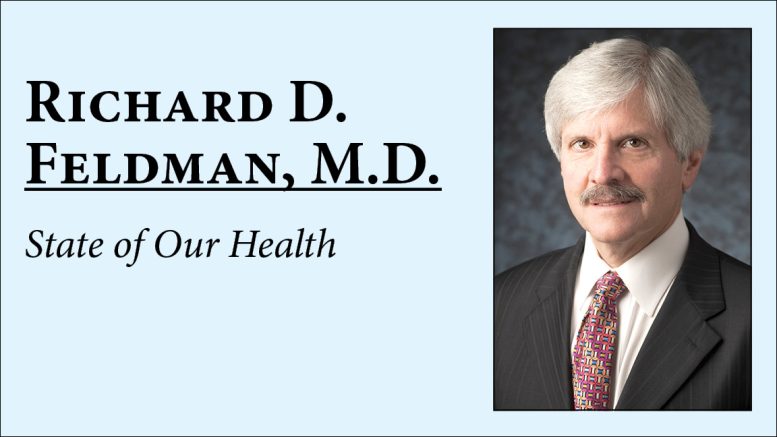
Richard D. Feldman, M.D. is an Indianapolis family physician and former Indiana State Health Commissioner who served in the administration of Governor Frank O’Bannon.