
I was impressed by a recent perspective published in the New England Journal of Medicine, titled “The Dismantling of Environmental Protections – A Grave Threat to America’s Health,” which serves as a major source for this column.
In 1970, President Richard Nixon lamented that Americans were being “suffocated by smog” and “poisoned by water.” He declared that clean air and water should be “the birthright of every American.” With the president’s encouragement, Congress established the Environmental Protection Agency and enacted the Clean Air Act, both with bipartisan support.
The authors maintain that the resulting environmental improvements “are among the most effective health interventions of the past half-century, having reduced U.S. air pollution by 75% and saving 200,000 lives per year.” Progress of that magnitude may now be in the rearview mirror.
During President Trump’s first term, about 100 environmental and occupational protections, including air-quality mandates, were rescinded. Although President Biden reversed some of those actions, the authors believe they caused significant adverse health consequences. The second Trump administration’s actions “have been even more aggressive, portending greater harm.”
In March 2025, the EPA announced 31 new regulatory reversals that would accelerate climate change, increase air and water pollution, make workplaces more dangerous, and ultimately cause disease and premature death. These outcomes are determined by established science, not opinion. Some examples include:
- Lowering the fine airborne particulate matter standard, which would increase childhood asthma, heart attacks, strokes, chronic respiratory conditions, and deaths.
- Undermining regulations governing air pollution from oil and gas extraction.
- Increasing allowable releases of airborne neurotoxins and carcinogens, including arsenic and benzene.
- Terminating the “Good Neighbor Plan,” which protects downwind states from nitrogen oxide emissions that promote ozone formation, thereby exacerbating respiratory disease and increasing mortality.
- Adopting policy changes that favor fossil fuel combustion (primarily coal) while discouraging clean-energy sources, harming long-term planetary health and increasing cardiopulmonary disease in the short term.
- Increasing allowable greenhouse gas emissions from power plants, accelerating climate change and increasing particulate matter and ozone formation, leading to greater cardiopulmonary morbidity and mortality, premature deliveries, and stillbirths.
- Lowering limits on mercury emissions from coal-fired power plants. Mercury enters the food chain as methylmercury (different from the mercury in vaccines). Pregnant women who ingest methylmercury risk causing brain damage and diminished cognitive function in their infants.
- Enactment of the “One Big Beautiful Bill,” which ended federal subsidies for solar- and wind-powered energy production, further increasing fossil fuel utilization.
- U.S. withdrawal from the Paris Agreement, resulting in adverse global consequences.
- The proposal to end the greenhouse gases “Endangerment Finding,” which determined that greenhouse gases are pollutants. This will terminate the EPA’s authority to regulate “climate-forcing pollution.” These climate-change-denying actions will result in further increases in heat waves, wildfires, floods, and other natural disasters.
- Relaxing automotive emission standards.
- Weakening drinking water quality standards by allowing greater levels of PFAS (“forever chemicals”), lead, mercury, and arsenic; thus, increasing the incidence of cancer, cardiovascular disease, pediatric cognitive dysfunction, and other conditions.
Pollution is largely an invisible health threat and is therefore easily dismissed or overlooked by everyday Americans. Undermining science, eliminating agency research capabilities, and reducing staffing at the EPA and other agencies compromise essential evidence-based policy development.
The authors conclude that “…this administration’s actions will undo the work of generations. Its policies will result in dirtier skies, befouled waters, rising temperatures, more dangerous workplaces, and diminished quality of life…”
The price will be paid in the currency of disease and death.
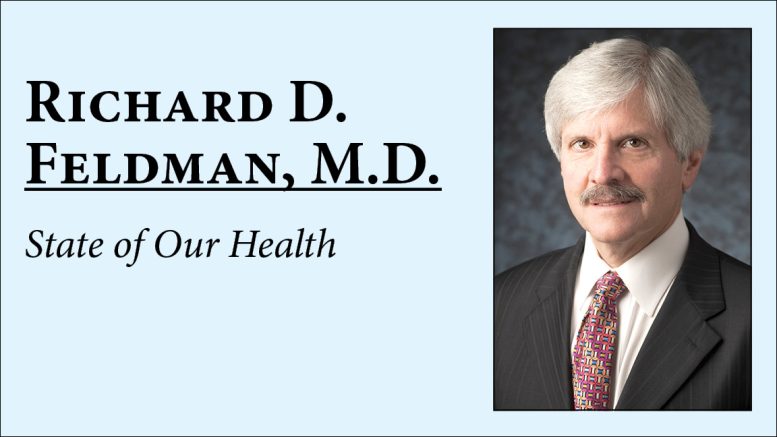
Richard D. Feldman, M.D. is an Indianapolis family physician and former Indiana State Health Commissioner who served in the administration of Governor Frank O’Bannon.
There’s a very valid argument to be made that one of the reasons we have enjoyed the standard of living that we do is that we’ve seen the value & necessity of having regulations in place for the benefit of all.
I’ve visited several countries where they possess neither the means nor the inclination to regulate air & water quality .. and the resulting conditions negatively affecting the quality of daily life is evident.
The politics of grievance doesn’t appear to be serving U.S. all that well.