

By KEVIN YANEY
Guest Columnist
There is a lot of Civil War history that many of us drive past every day. Over 2,000 men from Hamilton County were soldiers during the war. The vast majority of them are buried in the 90 cemeteries scattered across the county.
One of the most prominent is Riverside Cemetery in downtown Noblesville. Positioned just south of the Conner Street bridge, behind the East Bank Apartments, Riverside is the final resting place for 75 Civil War veterans.
Riverside Cemetery was established in 1820 along the White River. That was three years before Noblesville was founded. The grounds are a monument to the very beginnings of Hamilton County and the city that became the county seat. It has been beautifully restored by the city. If you take a stroll through the cemetery, you cannot help but notice the old gravestones and the veterans’ markers that dot the landscape. The majority of the veterans laid to rest in Riverside were Civil War soldiers.
Some of these stones are quite elaborate. One such stone marks the grave of William Garver, the highest-ranking officer from Hamilton County during the war.
Garver was a Noblesville attorney who had married the daughter of the former governor of Indiana. He was a descendant from German immigrants who opposed slavery. In 1854, he became a Republican due to the party’s anti-slavery stance.
During the war, he used his influence to help raise the 101st Indiana Volunteer Regiment and became their colonel. Many Hamilton County men volunteered to fill the rolls of the 101st Regiment. Sent to the western theater, the 101st Indiana saw action in some of the bloodiest battles of the war, including the Tullahoma Campaign, Chickamauga, Missionary Ridge, the battles around Atlanta, Sherman’s March to the Sea, and the Carolinas Campaign.
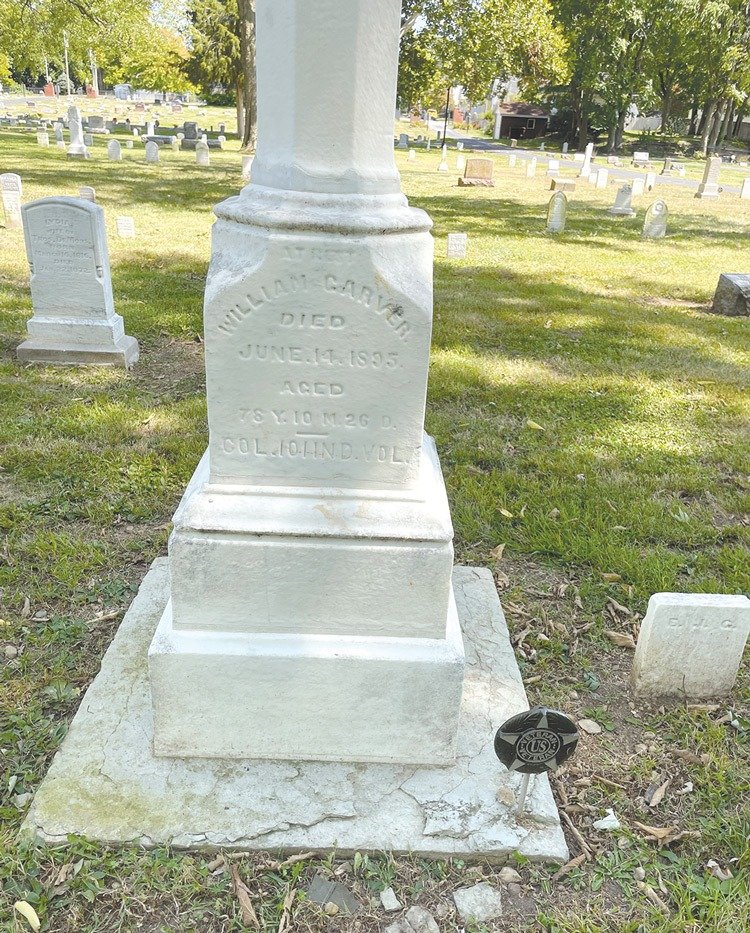
The grave of Colonel William Garver of the 101st Indiana Regiment. Garver was a lawyer, judge, and state representative from Noblesville. (Photo provided by Kevin Yaney)
When you walk through Riverside Cemetery, you will also notice many ordinary looking stones. One such stone marks the grave of Barney Stone.
Stone was born a slave in Kentucky. When he was 16 years old, he escaped to Louisville, where he joined the Federal Army in the 108th U.S. Colored Troops in June 1864. The U.S. Colored Troops were formed after the Emancipation Proclamation made it possible for African Americans to join the Union Army as soldiers. Many slaves sought refuge with Federal Troops, and many of them enlisted as soldiers. In total, 180,000 African American men joined the Union Army between 1863 and 1865.
Besides Barney Stone, at least 13 other African American veterans who served in the Civil War are laid to rest at Riverside Cemetery.
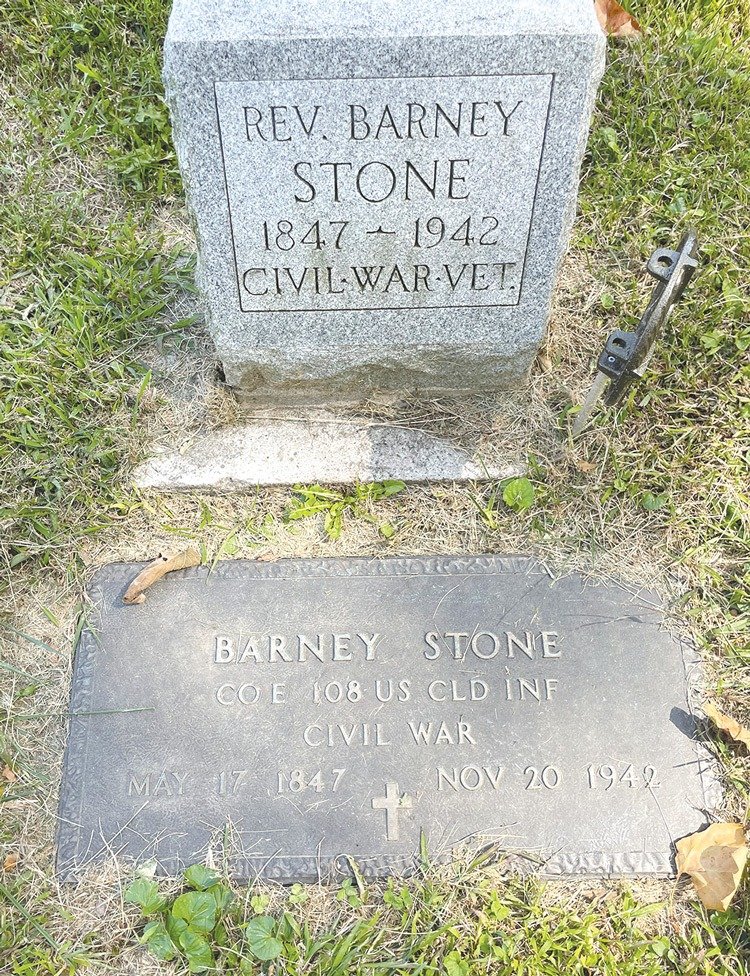
Barney Stone was a slave in Kentucky before he ran away and joined the Union Army in 1864. He later became a Christian minister, serving at the First Baptist Church in Noblesville. (Photo provided by Kevin Yaney)
If you would like more information on the Civil War veterans from Hamilton County, Kevin Yaney is leading a Civil War Veterans Walking Tour at 1 p.m. Saturday, Sept. 20. The event is free, but you need to register at CivilWarVeteransWalkingTour.com.