

There is something magical about Halloween that has very little to do with candy.
This year, as I watched the hustle and bustle in my neighborhood, I found myself appreciating something beyond the costumes, decorated porches, and buckets of candy. It was the people. The conversations. The laughter. The unexpected connections happening right outside our front doors.
The weather certainly played its part this year. A pleasant evening brought families out in abundance. Children dressed as superheroes, princesses, ghosts, and characters from their favorite stories went from one doorstep to another. Parents walked alongside them, neighbors opened their doors, and people who might otherwise pass each other without a word suddenly had a reason to stop, smile, and say hello.
I noticed something interesting.
On Halloween, children seem to have a special kind of permission. They can walk up to almost anyone’s front door, ring the doorbell, introduce themselves through a costume, and ask for something sweet. There is an unspoken invitation to connect. Homes that might feel unfamiliar on any other evening become welcoming stops along the neighborhood route.
In fact, children often become the community connectors for their parents. They encourage adults to walk together, meet neighbors, exchange greetings, and sometimes reconnect with people they haven’t spoken to in months.
Think about that. It takes a child in a dinosaur costume or a superhero cape to get two adults talking!
For one evening, we seem to set aside our usual hesitation. We become more approachable. We make room for conversations with people whose names we may not even know. We celebrate togetherness without needing a special introduction or a scheduled gathering.
But why only Halloween?
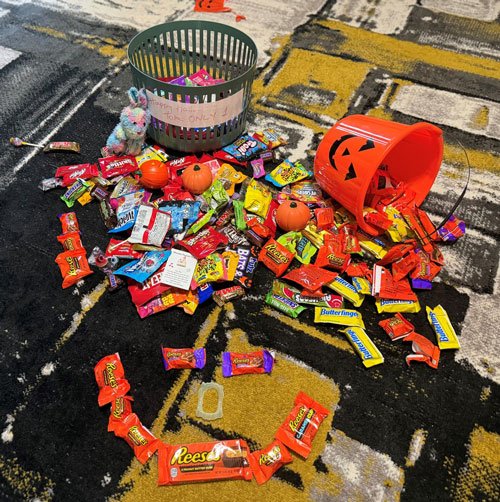
Photo provided by Pooja Thakkar
Why do we spend the other 364 days treating our neighbors like strangers? Why do we wait for a decorated porch, a costume, or a bowl of candy to give ourselves permission to connect?
I am not suggesting that we abandon healthy boundaries or forget personal safety. But perhaps we can borrow a little of Halloween’s openness and carry it into our everyday lives.
Imagine what could happen if we knocked on a neighbor’s door just to say hello, invited someone for a cup of tea, checked on an elderly neighbor, or stopped for a few extra minutes to ask how someone’s day was going.
What if we didn’t need a costume to start a conversation? What if we didn’t need candy to create a reason to visit? What if a simple smile, a shared meal, or a genuine question became our everyday trick-or-treat?
Community isn’t built in one evening. It grows through the small, ordinary moments when we make ourselves available to one another.
As I watched children leading the way this Halloween, I was reminded that sometimes the youngest members of our community teach us the biggest lessons. They don’t wait to be invited into belonging. They simply show up, reach out, and create an opportunity.
Perhaps that is the sweetest treat Halloween leaves behind.
So, as we put away the costumes and empty the candy buckets, let’s not pack away the spirit of connection.
Let’s be the neighbor someone feels comfortable knocking on. Let’s be the familiar face someone looks forward to seeing. Let’s make room for conversations that turn acquaintances into friends and neighbors into a community.
After all, belonging shouldn’t be a once-a-year celebration. It should be something we practice every day.
Why wait 364 days to be neighbors?
Pooja Thakkar is working to build cultural connections. You can read her column each week in the pages of The Reporter.
Be the first to comment on "Why do we wait 364 days to be neighbors?"