
By RAJA RAMASWAMY
Guest Columnist
 As we begin 2026, Indiana’s political class keeps insisting that Hoosiers are split into irreconcilable camps on the left and right. Over the past year, actions and rhetoric from Mike Braun and Micah Beckwith, particularly during the redistricting fight, fed that narrative by turning a debate about representation into a cultural and moral showdown.
Yet the response that followed mattered far more.
Hoosiers pushed back. Lawmakers, including many Republicans, stepped away from the most extreme outcomes. Common sense prevailed because voters refused to accept the premise that Indiana belongs to irreconcilable camps. The episode revealed a clear gap between political provocation and public reality.
Step outside that political script and a different Indiana appears. It is clear that Hoosiers care about the same things: the economy, safety, healthcare, and their children. People work together without asking who voted for whom. Parents show up at school events. Neighbors help each other after storms. Faith communities, youth sports leagues, volunteer fire departments, and food banks function because cooperation matters more than ideology. Politics rarely dominates those spaces. When it does it usually gives way to practical problem solving.
I see this daily in my own neighborhood. The political spectrum on my block is wide and obvious. Yard signs change every election cycle. Conversations shift depending on who is hosting the cookout or stopping to chat outside.
But the priorities stay the same. We worry about rising costs. We worry about aging parents. We worry about keeping up. We borrow tools. We watch each other’s houses. We complain about traffic. We celebrate milestones together.
The labels fade quickly when real life shows up.
There is data behind that experience. Trust in Congress sits near historic lows, often below 20 percent. Trust in local communities and personal relationships remains far higher. Indiana follows that same pattern. Skepticism flows upward toward institutions, not sideways toward neighbors. The division concentrates in politics and messaging, not in daily interaction.
Indiana’s voting behavior also complicates the narrative of rigid camps. A growing share of registered voters identify as independent or unaffiliated. Ticket splitting remains common in statewide races. Hoosiers often separate candidates from parties and outcomes from ideology. That pragmatism clashes with a political culture that insists on sorting people into opposing teams.
So why does polarization feel dominant? Because it is rewarded. Conflict attracts attention. Outrage mobilizes supporters. Emotionally charged messaging spreads faster than careful analysis. Even I know that writing a more negative piece garners more attention. Division becomes a strategy instead of a failure.
The consequences show up locally. Polarization erodes trust in institutions that rely on cooperation. It complicates public health responses. It weakens civic participation. It makes governing harder than it needs to be. Indiana depends on collaboration, whether responding to emergencies, supporting schools, or sustaining economic growth. Politics built on division undercuts that foundation.
Hoosiers do not need or want uniformity. Disagreement belongs in a democracy. We are asking for seriousness. We want leaders focused on outcomes rather than outrage, on governing rather than perpetual campaigning. With unified Republican leadership now in place, the opportunity and the responsibility to lower the temperature rests squarely in one party’s hands, but the benefits belong to all Hoosiers.
As voters we have leverage. The task ahead is straightforward. Keep common sense front and center. Reject extremes on both the left and the right that thrive on outrage and grievance. Reward leaders who lower the temperature, tell the truth, and focus on solving problems.
Indiana works best when voters insist on politics grounded in reality, restraint, and shared purpose, and reject anything less.
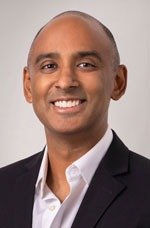
Raja Ramaswamy is an Indianapolis-based physician and the author of “YOU Are the New Prescription.”
Excellent article. The truth is that we as a nation are more centrist than far left or far right. Is Ramaswamy running for office?