
Wellness: the state of being healthy, especially when it is something that you actively try to achieve. (Cambridge English Dictionary)
I just adore words, reading them, writing them, listening to them … you get the picture. Of course, there are exceptions; chief among them are words which are considered performative, obscene, or worse yet, useless.
Now I am not saying that the word “wellness” is any of those … or am I? I will get to that explanation, but I will remind my readers that the earliest known written use appears in a 1654 diary entry by the Scottish statesman Sir Archibald Johnston, Lord Wariston, who wrote, “I blessed God for my daughter’s wellness.” Profoundly sincere and simply stated.
Of course, I, and others like me who teach fitness classes and certified as a nutrition and wellness consultant should be “all in” on “wellness” particularly as it is defined by Cambridge. However, it is difficult to turn on the computer, check social media, watch a television commercial (if you actually do that!), read a magazine, or peruse the book shelves without seeing the word “wellness” to attract your attention. The 21st Century advertisers, in particular, have used the word “wellness” to sell everything from toothpaste to vitamins and everything in between.
As much as I incorporate the word wellness in my writings, I frown to see it used in ways that are commercially self-serving and confusing. So let’s get into the definition of that word as it pertains to us personally and in our everyday lives.
While I am not licensed or certified to give medical evaluations, I am a keen observer of what can appear to be a lack of wellness. Chief among these are obvious: a person who is a smoker, heavy drinker, one who partakes of fast food and/or non-nutritional or “junk food” items, and one who declines to make movement an integral part of their daily activity. None of these characteristics or habits can incorporate a healthy lifestyle, or basic wellness. Similarly, those persons who do not stay focused intellectually and mentally and find ways to make a difference in their surroundings also lack a basic concept of wellness.
Can we encompass wellness if we are disabled, elderly, a size or two above our ideal, dealing with chronic issues such as diabetes or high blood pressure? The answer is yes! I am familiar with folks meeting some or several of these issues yet they find time, they make time, they use time, to do their very best to be the best they can; physically, mentally, intellectually, and more than anything – to enjoy life.
I find that the word can also be intimidating. Wellness can be achieved without a great deal of cost, knowledge, effort, or time. I know people who are undergoing chemotherapy and other serious illnesses whom I would declare that they are examples of wellness through their attitudes and their focus on what is best for their bodies and minds.
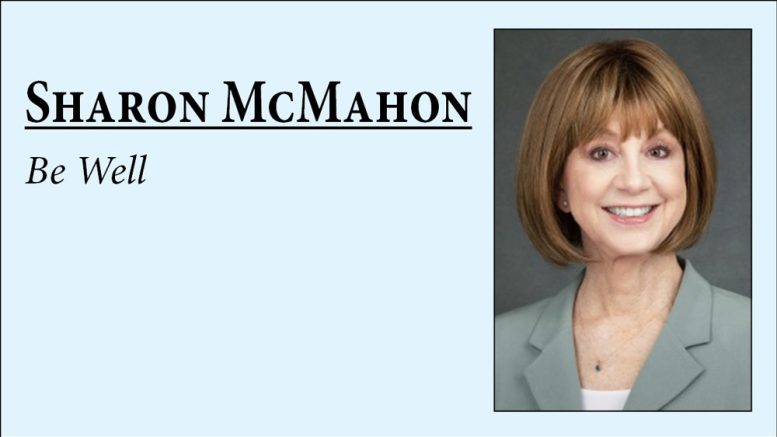
My column here is tagged “Be Well” because that to me is the basic goal of our human lives and we can get there with our mind-body connection and attention to what is truly good for us. As individuals, families, neighborhoods, regions, and as a country we need to eat better, move our bodies, read frequently, talk, and listen to each other more, and smile!
Be Well!
Sharon McMahon, CNWC
The opinions expressed in this article are not intended to replace advice of your personal physician or licensed health professional. Please consult your physician for to any issues you may have related nutrition or fitness activity.
Be the first to comment on "A few words on ‘wellness’"