
Submitted by Munley Law
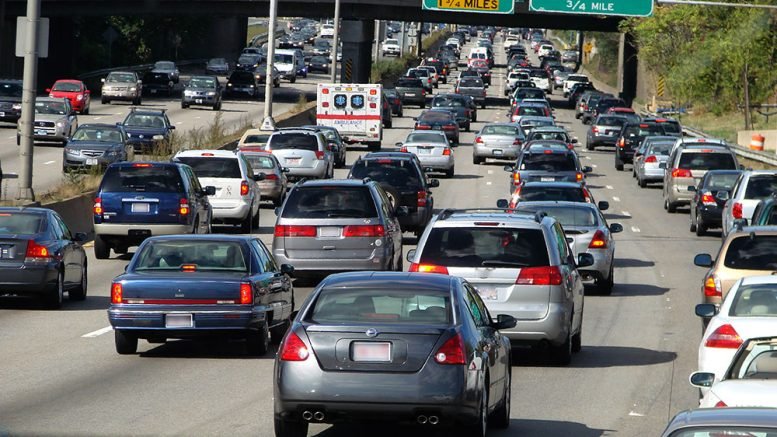
There’s tired, there’s stressed, and then there’s weekday-morning-traffic stressed – a uniquely American condition that can turn even the calmest commuter into someone muttering at brake lights.
For millions of workers, the drive to the office isn’t a simple A-to-B trip; it’s a slow-moving pressure cooker of tailgaters, sudden stops, bottlenecks, and the nagging fear that you’re about to miss a meeting because someone three cars ahead couldn’t merge.
Road rage, of course, rarely explodes out of nowhere. It accumulates … one abrupt lane-cut, one cryptic detour sign, one inexplicable slowdown at a merge until the entire stretch of road becomes emotionally charged.
To map out these everyday flashpoints, Munley Law, a personal injury law firm, surveyed 3,015 U.S. workers who drive to work, asking them which roads they associate most with stress, frustration, and aggressive driving.
Here are the three angriest commutes among Hoosier drivers:
No. 1: U.S. 31, Carmel to Indianapolis
Modernization brought numerous roundabouts to the U.S. 31 corridor, improving safety but creating new patterns that take time for drivers to adjust to. During peak periods, the high volume of vehicles entering from cross streets can create significant delays. The stretch through Carmel, in particular, sees steady congestion tied to regional growth.
No. 2: I-65/I-70 Downtown Split, Indianapolis
The downtown split sees multiple major traffic flows converging into a tight corridor. Lane changes, close-spaced exits, and steady commuter demand contribute to regular congestion. Any breakdown or collision can quickly cause backups extending across the city’s interstate loop.
No. 3: I-465 at I-70 East, Indianapolis
This east-side interchange blends airport-bound traffic, commuters, and long-haul trucking in a configuration that often results in slowdowns. The cloverleaf design requires significant weaving between lanes, and growing logistics activity in the region has increased truck volumes substantially. Even off-peak, the interchange can feel crowded.
“A lot of these rush hour frustrations will sound painfully familiar to anyone who drives regularly,” Jack Cartwright of Munley Law said. “We hear these stories all the time from people involved in collisions – not because they were doing anything reckless, but because the road itself had become a pressure point. When traffic is unpredictable, and everyone’s on edge, small mistakes can snowball quickly. Understanding where those tensions build helps explain the kinds of cases we see every week.”