
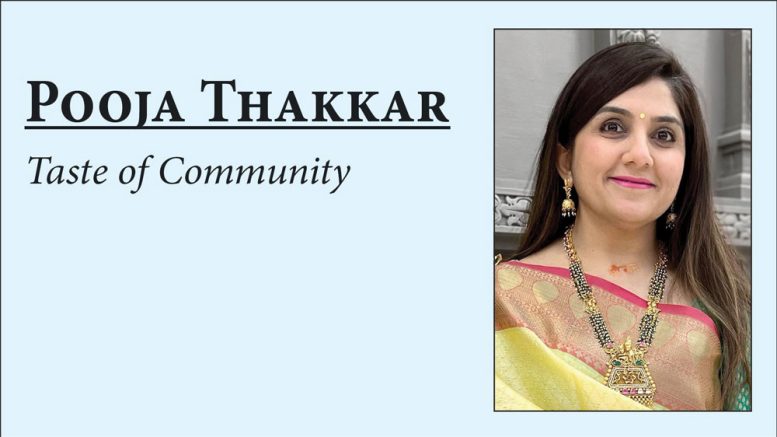
Relocating to a new community is never just about changing your address. It’s about recreating your identity, rebuilding relationships, and finding your place in a space that is unfamiliar yet full of possibility.
When I moved from India to Indiana, I did so blindly following my brand-new husband, stepping into a new life with an arranged marriage and an entirely different culture. It was both exciting and uncertain – a double-edged sword of opportunity and challenge.
What I quickly realized is that belonging doesn’t just happen. It is intentional. It is built through curiosity, openness, and the courage to show up in spaces where connection might feel uncomfortable at first. It’s about leaning into the unfamiliar and making the choice to honor both your own story and the stories of those around you.
This message was at the heart of my talk on the Diversity & Belonging Panel with HCLA. I shared how creating belonging has been central not only to my personal journey but also to my community work. Through my passion project, Taste of Community, I’ve seen firsthand how stories, traditions, and food can become bridges.
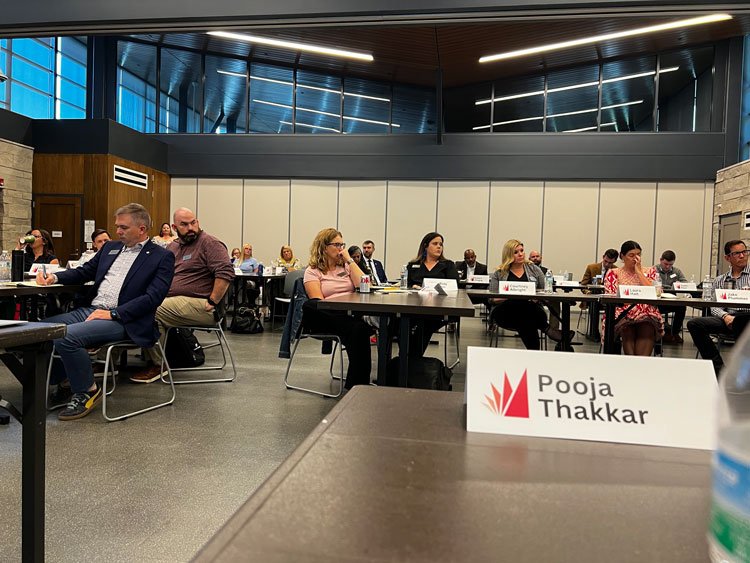
Our columnist spoke about the intentionality of belonging when she took part in the Diversity & Belonging Panel with the Hamilton County Leadership Academy. (Photo provided by Pooja Thakkar)
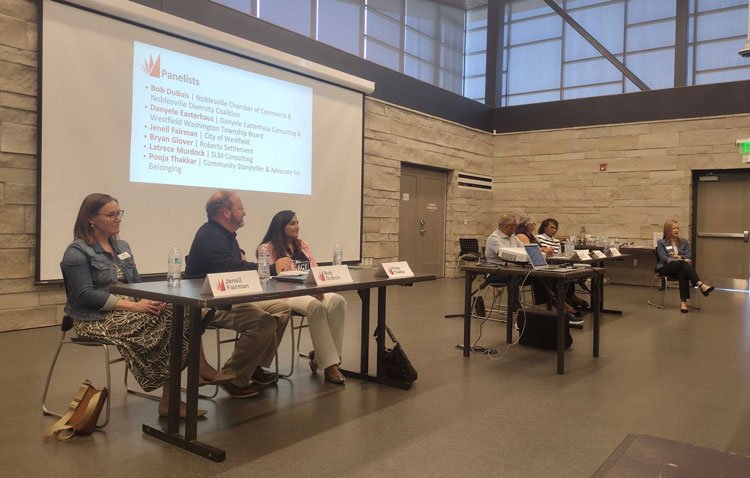
Photo provided by Pooja Thakkar
One of the most memorable experiences was hosting a long-table community dinner, where everyone brought a dish memory that carried a story. As we shared meals and memories, we expressed gratitude for the hands and hearts behind those recipes. People shared stories about grandparents, neighbors, and even strangers who had once made their day with an act of kindness. That evening wasn’t just about food – it became a tangible expression of connection and belonging.
Another moment that reinforced this idea was in an assisted living group, where we did a yarn web activity. Each person shared a memory or something they were grateful for, and as the yarn was passed, a web formed across the room. At the end, everyone could see how they were connected, literally and figuratively. It was a simple, hands-on demonstration of how belonging is not a feeling that happens by chance – it is created through intentional action and shared stories.
Even through my children, I’ve experienced the power of creating belonging. When they shared Diwali in their classrooms, bringing sweets and explaining the festival, it was more than just an educational moment. It was a way to make heritage visible, to spark curiosity, and to allow peers to see the beauty in differences. Small acts like this ripple outward, reminding us that honoring our own story encourages others to do the same.
Staying connected in Hamilton County has also meant showing up locally – supporting small businesses, joining nonprofit boards, participating in cultural events, attending farmers markets, and celebrating city events – while keeping my roots alive through language, food, and festivals. I’ve found that when you honor your own story, it gives others permission to share theirs. That openness is contagious.
Belonging is not about blending in – it’s about showing up fully, respecting differences, and creating spaces where everyone feels seen, valued, and included. It’s about intentionally widening your boundaries, noticing the people in your daily life – those standing next to you in line at a coffee shop, at a sports event, or in networking spaces – and taking the small steps to connect. These moments, small as they may seem, are where community and connection truly grow.
So here’s a gentle reminder for all of us: lean into the uncomfortable, reach out to those who live, eat, or think differently, and honor your own story. Every meal shared, every conversation had, and every memory recounted is a thread weaving us together. And through these intentional acts, belonging is not just a feeling – it becomes a lived experience, a community, and a legacy.
Pooja Thakkar is working to build connections through cuisine. You can read her column each week in the pages of The Reporter.