
There is something magical about a festival that gives you permission to color outside the lines.
Holi, the Indian Festival of Colors, arrives just as winter loosens its grip.
It is a spring festival, yes. But it is also a festival of belonging: a festival that gently reminds us that even if you don’t look like me, eat like me, pray like me, or speak like me, you can still stand beside me, laugh with me, and walk home with your cheeks stained pink and yellow.
Because when you’re holding a handful of color, you don’t discriminate. You don’t ask questions. You simply reach forward and say, “Happy Holi” or “Burra mat Mano, Holi Hai!” which means, “Don’t get offended, it’s Holi time!”
Growing up in India, Holi was not just a day. It was a feeling that stretched across two full days and filled the entire neighborhood.
The first night is Holika Dahan – the lighting of the sacred bonfire. As children, we would gather barefoot around towering flames. Families formed circles, moving slowly around the fire, offering prayers and gratitude. Someone carried a jug of water and gently poured it along the circular path. We offered patasa – tiny sugar sweets – along with dates (khajur) and roasted pops of grain called dhani into the holy fire.
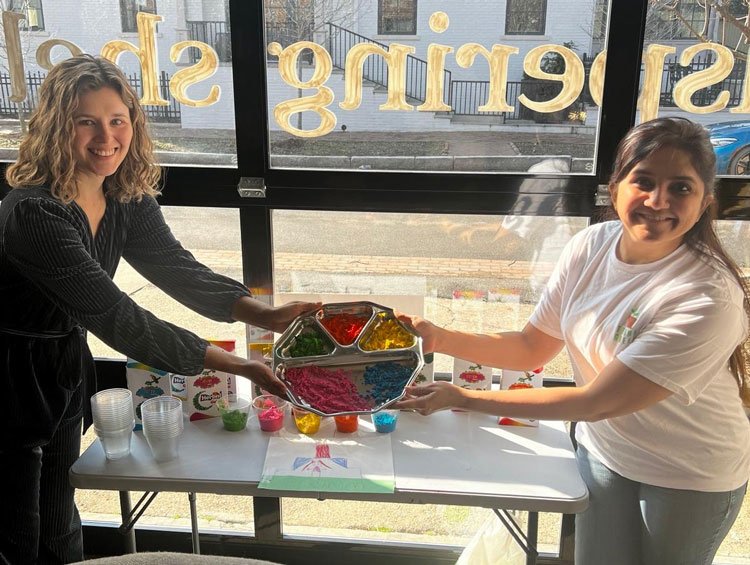
Photo provided
I remember watching elders stretch their hands and feet toward the warmth. “Take the blessings of the fire,” they would say. “It will keep your joints strong all year.” As a child, I didn’t question it. I simply believed in the glow.
When a new baby was born into the family, that first Holi was especially sacred. The mother’s brother would carry the baby and walk in a circle around the fire. The girl’s family brought special sweets and gifts for the newborn. It was more than ritual; it was the community announcing, “We see this new life. We welcome it.”
The fire burned for hours. And somehow, in that orange glow against the night sky, winter truly felt finished.
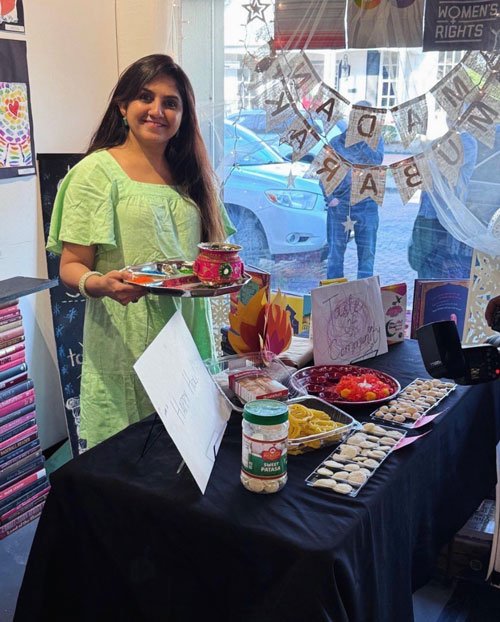
Photo provided
The next morning was pure joy.
We woke early and prepared natural colors. We soaked jaasood (hibiscus) flowers in water to create bright hues. We filled our pichkaris – water pumps that looked like playful water guns – and stepped into the streets. Neighbors became targets. Friends became artists. Children, grandparents, teenagers – everyone joined in.
The streets transformed into moving rainbows. Laughter echoed from balconies. And by midday, you couldn’t recognize anyone – which, in a way, was the point.
For one day, identity blurred. Differences dissolved. Color made us equal.
By afternoon, exhausted and drenched, we returned home for the reward: sweet seviyan, cool saffron-scented shrikhand made from yogurt, Thandai-Holi special drink, fluffy puri, and curry. After hours of running wild, we earned every bite. The food tasted like celebration itself.
Fast forward to Indiana.
Every year, rain or shine, I take my girls to the Hindu Temple of Central Indiana for Holika Dahan. The bonfire glows against a Midwestern sky. Families circle it just as we did back home. The traditions are lovingly recreated. The prayers feel the same. The warmth feels the same.
We may not drench entire streets the way we once did in India, but we still smear a little pink across each other’s cheeks. We still say, “Happy Holi.” We still belong.
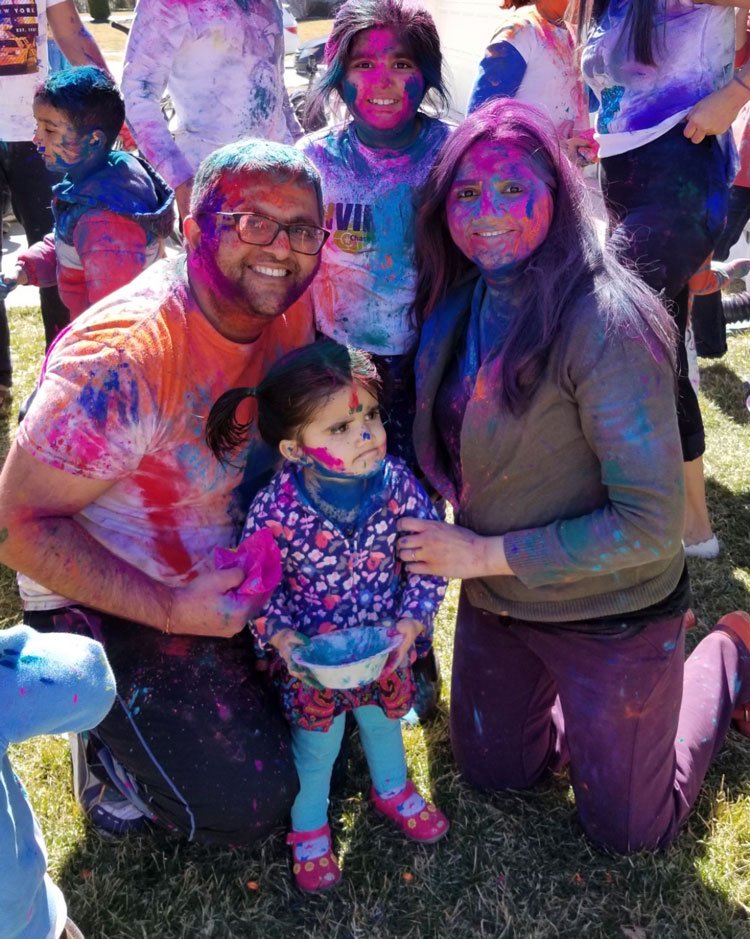
Photo provided
Last year, Holi gave me another unexpected way to share its colors.
Instead of holding a pichkari, I stood between bookshelves.
I was invited to read aloud about Holi at two wonderful local bookstores: The Whispering Shelf in Indianapolis and Curious Squirrel Books in Zionsville. In both places, I chose a Holi book they already had on their shelves. I wanted to begin with what the community could physically hold in their hands.
I opened the pages and started reading.
But somewhere between the printed lines, my own memories spilled out.
I paused to explain what Holika Dahan feels like when the fire is taller than you. I described streets in India turning pink and yellow by noon. I told them about jaasood flowers soaking in buckets, about pichkaris aimed at unsuspecting cousins, about shrikhand waiting at home after hours of play.
The book gave the outline. The lived experience gave it breath.
Many in the audience had never heard of Holi before. Some only knew it as “the color festival.” They didn’t know about the bonfire, the symbolism of good over evil, the welcoming of spring, the way neighborhoods come alive.
While turning a book pages, I witnessed the curiosity bloom in a room full of strangers. And yet they leaned in. They asked questions. We laughed. They imagined.
It was beautiful to witness a community craving diversity – not quietly, but openly. Wanting to learn. Wanting to celebrate. Wanting to understand traditions beyond their own.
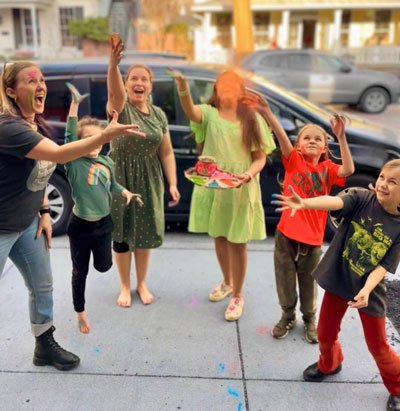
Photo provided
In those moments, I realized something powerful: Holi is not just about powders and water.
It is about stepping out of winter – literal and emotional. It is about knocking on a neighbor’s door. It is about recognizing that under layers of identity, we are all human canvases waiting to be brightened.
If Holi is about spreading color, then perhaps stories are another form of it. Both felt just as meaningful.
And every year, whether around a bonfire, inside a temple, or between the shelves of a bookstore, I am reminded that belonging is the brightest color of all.
Happy Holi!
Pooja Thakkar is working to build connections. You can read her column each week in the pages of The Reporter.