
Have you ever watched something burn and wondered what it represents beyond the flames?
Every year, during the Hindu festival of Dussehra, communities gather to watch a towering figure go up in flames. This ritual, known as Ravana Dahan, symbolizes the triumph of good over evil. For those unfamiliar with the tradition, the figure represents Ravana, a powerful king from the ancient Hindu epic, the Ramayana, whose pride and desire ultimately led to his downfall.
But this centuries-old story carries a message that reaches far beyond religion, culture, or geography. It asks a question that feels especially relevant today: What if the evil we are so quick to recognize in others is also something we need to confront within ourselves?
According to the Ramayana, Ravana was a learned scholar, a powerful ruler, and a devoted follower of Lord Shiva. Yet his knowledge and accomplishments could not protect him from his ego, arrogance, and choices that caused harm. His story reminds us that intelligence, success, status, and even good intentions do not automatically make us good people. How we treat others matters just as much as what we achieve.
Look around our world today. We see disagreements turning into divisions, differences becoming reasons for judgment, and conversations ending because everyone wants to be right. On social media, we can be quick to criticize without understanding the full story. In our workplaces, neighborhoods, and communities, we may speak about kindness and inclusion while overlooking the person who feels unheard or unwelcome.
And sometimes, the hardest truths are the ones we must acknowledge about ourselves.
We may volunteer, lead community initiatives, support our neighbors, and advocate for belonging. These actions matter. But do we listen when someone challenges our beliefs? Can we apologize without making excuses? Are we willing to admit that even with good intentions, our actions may have hurt someone?
Perhaps the real Ravana is not a person we need to defeat, but a collection of qualities we need to recognize within ourselves: ego, anger, jealousy, greed, prejudice, resentment, intolerance, and the need to always be right.
As the effigy burns, we have an opportunity to reflect on what we are ready to release.

Photos provided by Pooja Thakkar
In my Taste of Community journey, I continue to learn that belonging is not created simply by inviting people to the table. It grows when we make room for different perspectives, listen to stories unlike our own, and take responsibility when our words or actions cause hurt. Reconciliation begins when we stop focusing only on who is right and start asking how we can make things right.
We cannot control every action around us. We cannot eliminate every disagreement. But we can choose humility over ego, curiosity over judgment, and dialogue over division. We can acknowledge our mistakes and make a genuine effort to do better.
This Dussehra, whether or not you celebrate the festival, consider this invitation: What part of yourself needs to change? Which relationship needs healing? Whose story have you yet to hear?
The victory of good over evil is not only an ancient story or a spectacular night of fire. It is a choice we make every day – in our homes, our workplaces, our neighborhoods, and our communities.
Perhaps the most meaningful Ravana Dahan is not the one we watch, but the one we practice within ourselves.
Because a true Taste of Community begins when we are willing to grow, make amends, and create a world where more people feel seen, heard, valued, and welcome.
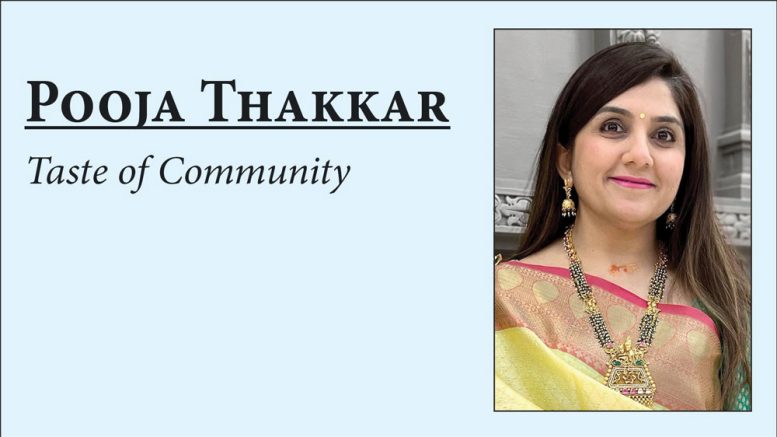
Pooja Thakkar is working to build cultural connections. You can read her column each week in the pages of The Reporter.
Be the first to comment on "Taste of Community: the Ravana within us"