
By JIM MERRITT
Guest Columnist
 The world changed six years ago. What began as a cluster of pneumonia cases overseas became a global pandemic that took Hoosiers’ lives, upended daily routines, overwhelmed hospitals, shuttered businesses, and forced governments to make decisions at a pace and scale they weren’t ready for – and still aren’t.
As an Indiana State Senator, I had a front-row seat to how our state responded in real time – sometimes admirably, sometimes imperfectly and always under extraordinary pressure. Six years later, the most important question we should be asking is simple: Are we ready for the next pandemic?
Pandemics are not anomalies in history. They are recurring tests of human preparedness, leadership and collective responsibility. From the Antonine Plague in the Roman Empire and the 1918 influenza, to HIV/AIDS, SARS and Ebola, disease has repeatedly exposed both the strengths and vulnerabilities of societies.
Each generation receives warnings from the past, but too often those warnings fade once the crisis does. That pattern repeated itself during COVID-19.
In researching my new book, Lessons Learned: Are we ready for the next pandemic? History says no, I examined pandemics dating back nearly two millennia. Repeatedly, the same sequence emerges: initial denial, a fragmented response, the politicization of basic science, scapegoating of communities, and finally, collective amnesia once the acute crisis fades. COVID-19 followed that script with remarkable precision.
Indiana’s experience reflected the broader national struggle. Early in the pandemic, leaders were forced to make decisions with limited information and rapidly evolving science. Public health officials worked tirelessly, hospitals expanded capacity overnight and communities adapted in ways we never thought possible.
The crisis also revealed deep challenges. Public health guidance became entangled in politics. Trust in institutions eroded. Debates over personal freedom versus collective responsibility dominated public discourse. And once vaccines arrived and the immediate emergency subsided, much of the country, including Indiana, moved on quickly. That tendency to move on may be the most dangerous part of all.
Scientific progress during the pandemic was extraordinary. Vaccines were developed at an unprecedented rate. Data sharing across the globe accelerated research. Medical professionals gained invaluable experience in treating a novel disease. But scientific advancement alone doesn’t guarantee readiness.
Preparedness requires something less visible but just as important – sustained political will, coordinated leadership and a public willing to remember the lessons of the past and prepare for the future. We should be investing in early-warning systems, strengthening public health infrastructure, and maintaining clear lines of communication between government, scientists and citizens.
It also requires honest reflection. The pandemic forced difficult conversations about the balance between individual liberty and collective safety, conversations that remain unresolved. In a free society, those tensions are inevitable. But ignoring them or pretending they will disappear before the next crisis is a mistake.
The reality is that COVID-19 was not a once-in-a-century event. Since the 1918 influenza pandemic, the world has faced at least seventeen novel respiratory virus threats. Each one served as a warning. Each one offered an opportunity to prepare for the next. Yet, historically, we failed to act on those warnings.
That is why the anniversary of COVID-19 is more than a moment for remembrance. It’s a reminder to recommit. We owe it to the families who lost loved ones, to the healthcare workers who risked their lives and to the communities that endured profound disruption. Most importantly, we owe it to future generations.
The next pandemic is not a matter of if, but when. Whether Indiana – and the nation – is better equipped to respond will depend on what we choose to remember, what we are willing to change and how seriously we take preparation today. History shows us how to behave. The question is whether we will finally listen.
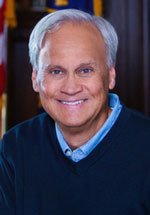
Author Jim Merritt was an Indiana State Senator for more than three decades. He had a front-row seat to Indiana’s pandemic response and lack of after-action planning. His research and expertise in state government led to the publication of Lessons Learned, with guiding solutions to prevent a repeat of COVID-19.