
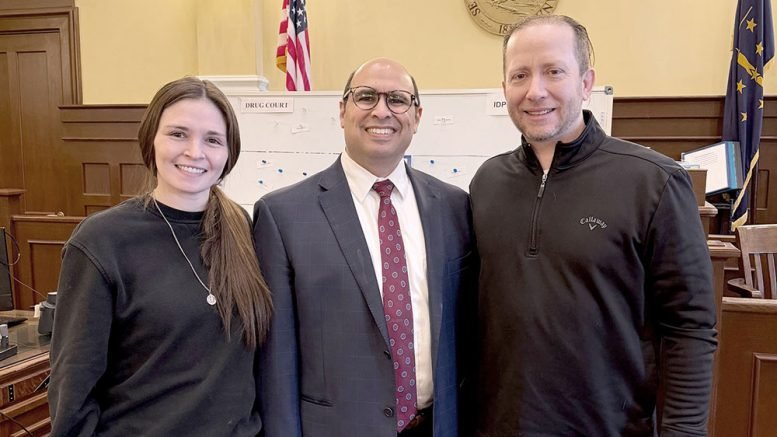
Hamilton County’s Drug Treatment Court recognized four graduates during a ceremony held Thursday, May 7 in the Historic Courthouse courtroom. The program provides a treatment-based alternative for nonviolent offenders working to overcome substance use disorder.
Among the graduates was Kimber Osborne, who has been sober since Aug. 27, 2024. Osborne began using opiates as a teenager and spent years navigating addiction and multiple treatment attempts. After relapsing during the pandemic and facing three arrests in three months, she entered the program ready for change.
“I was scared in the beginning – it was so hard,” Osborne said. “But I needed the structure and accountability. This program, along with my sponsor and support system, helped me surrender and truly commit to recovery.”
Osborne is now working, pursuing an MBA in Business at Indiana Wesleyan University, and plans to continue participating in recovery groups.
Jason Landers also graduated after achieving sobriety in August 2024 following his arrest two months prior. Landers describes his life before entering the program as chaotic and isolating, marked by substance use that led to legal trouble and instability.
“When I was arrested, I actually felt relieved,” Landers said. “I had no hope and no way out. This program gave me a chance when I didn’t think I’d get one.”
Landers embraced the program’s structure, committing fully to therapy, meetings, and personal growth. Early morning meetings helped him connect with others in recovery, and today, he continues to stay involved in the recovery community, serving as a sponsor.
“You have to be willing to change your whole mindset,” Landers said. “This isn’t just about getting out of legal trouble. It’s about changing your life.”
Participants in Drug Treatment Court commit to intensive supervision, substance use treatment, random drug testing, home visits, and education or employment requirements. The program typically takes 18 to 24 months to complete and is designed to support long-term recovery.
“The graduates’ success reflects their commitment to change and the effectiveness of the program,” said Superior Court Judge David Najjar, who oversees the program. “This program truly helps individuals rebuild their lives.”