
Exactly 100 years ago, a Hamilton County Circuit Court jury took heroic action which spelled the end of the Ku Klux Klan’s hold on Indiana’s government at the state and local levels. The jury of 12 local men convicted D.C. Stephenson of murder. It was heroic because the Klan was powerful and dangerous.
Stephenson, a 38-year-old huckster, was-hungry for power and personal wealth. He built the Klan into an organization of tens of thousands of white Christian men. The average Klan member in Hamilton County and most of the state was law-abiding who believed the organization was patriotic and opposed to excessive drinking and other bad habits. The KKK was painted as a social organization.
But, the Klan leadership under Stephenson was corrupt and potentially violent. Intimidation was a favorite tool used to threaten store owners and others with loss of business, and denying certain people membership in community organizations.
A local newspaper editor said that as a boy in the 1920s he was denied membership in the Boy Scouts because his family was Catholic. Jews and Catholics were targets of the Klan simply because they were convenient scapegoats, a threat to a white Christian America.
To exhibit their power, the Klan held massive marches through towns like Noblesville ending at the Courthouse Square with a rally and cross burning. Hard as it is today to believe, this was the 1920s in Indiana. And, Stephenson had bigger plans. He got himself appointed Grand Dragon of the Midwest and fostered national ambitions. He had gotten Ed Jackson elected governor in 1924 along with dozens of other state and local officials. Stephenson once, somewhat accurately, said “I am the law in Indiana.”
But, he made a fatal mistake.
In early 1925, he met an innocent and naive young woman, Madge Oberholtzer, and convinced her to accompany him on a train trip to Chicago. In his private train car, Stephenson savagely raped the woman. During a stop in Hammond, she escaped the train and went to a drugstore where she bought a bottle of mercury tablets.
She took a number of the pills and got deathly ill. Stephenson, in a panic, secured a car and drove Madge back to Indianapolis, taking her first to his elegant home in Irvington. Two days later she seemed sicker. Two of Stephenson’s goons took Madge to her parents’ home and put her to bed.
Her father called a doctor who came to the house and determined she had been poisoned and raped. Police were called. Two days later Madge died. Soon after, Marion County Prosecutor Will Remy filed murder charges.
It was a tough case. Stephenson’s attorneys got the case venued to Hamilton County where they believed a friendlier jury might be found. But, Remy had secured a dying declaration from Madge before she died. It was eventually admitted into evidence and ultimately the key to success.
The trial was a sensation. News reporters from around the country came to Noblesville. The courtroom was packed with locals and Klan members. After a long and drama-filled trial, the jury, on Nov. 14 – 100 years ago today – returned a verdict of guilty on the charge of second-degree murder. And with it went the Klan’s reputation.
Stephenson was sentenced to life in prison He was released on parole after 25 years, but promptly was arrested for molesting a teenage girl in Missouri and went back to prison for another six years. Released again in 1956, he moved to Tennessee where he died in 1966.
As time went on, there was never much mention of the trial. Many in Noblesville apparently thought of it as bad publicity. The Klan died out rapidly after the trial and talking about the Klan and Noblesville together was thought to give the wrong impression even though it was a Hamilton County jury that had brought about the end to Klan rule in Indiana.
Two years ago during the county’s bicentennial, there was virtually no mention of the trial that had such state and national implications. Through the years, it was another trial in 1925 that captured the nation’s attention: the Scopes Monkey Trial held in Dayton, Tenn., just four months before the Stephenson trial.
The Scopes trial was kept alive when it resulted in the movie Inherit the Wind. Perhaps unfortunately, no movie was made about the trial in Noblesville which had just as great or greater impact on history.
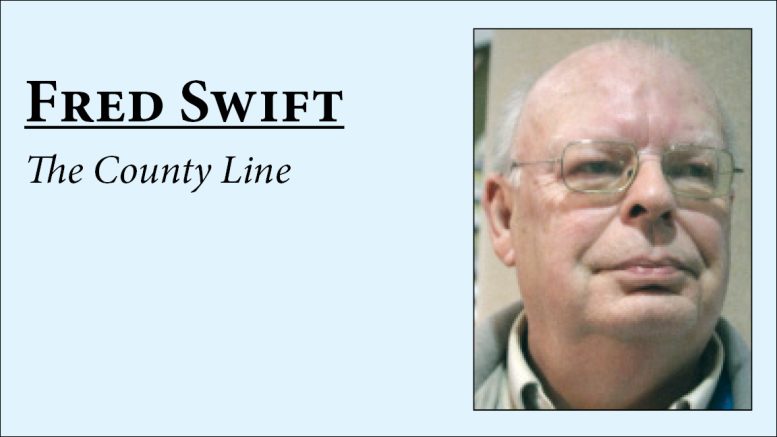
Columnist Fred Swift has worked in newspapers for decades. He has been sharing his opinions in the pages of The Reporter since it began. Email him at swiftfred19@gmail.com.