
There is a beautiful Māori word that offers us a powerful way to think about autism – and perhaps an even more powerful way to think about belonging.
Takiwatanga.
It is used to describe autism as being “in his or her own time and space.”
Not behind. Not less than. Not failing to keep up. Simply moving through life in their own time and space.
What if we carried that same spirit into how we care for one another as a community?
Right now, here in Noblesville, our community is experiencing the reality and disruption of historic flooding. For those directly affected, recovery isn’t going to happen all at once. There are homes and belongings to assess, questions to answer, decisions to make, emotions to process, and lives to put back together.
And in moments like these, perhaps Takiwatanga reminds us of something important: we don’t all recover on the same timeline.
For one family, the first priority may be finding a safe place to stay. For another, it may be cleaning out a home. Someone else may be trying to navigate insurance, repairs, transportation, work, school, or simply figure out what tomorrow looks like.
There is no single checklist for how a person processes disruption.
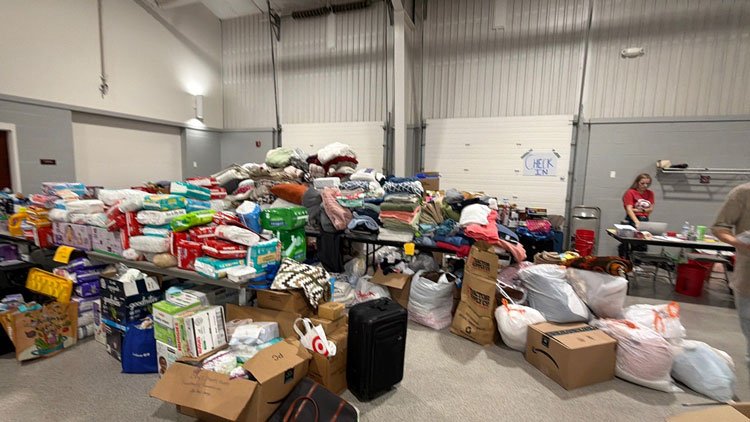
Photo provided by Pooja Thakkar
So perhaps our role as a community isn’t to expect everyone to have the answers immediately.
Our role is to make room. Room to breathe. Room to process. Room to ask for help. Room to solve one problem at a time.
While people are finding their own way forward, our community can remain present – not just for the outcome, but for the process.
That is where belonging becomes action.
It looks like the neighbor who checks in again tomorrow, not just today.
It looks like someone saying, “What do you need right now?” rather than assuming what someone needs.
It looks like volunteers showing up, local organizations coordinating resources, businesses opening their doors, neighbors sharing what they have, and people making sure those who are most vulnerable aren’t forgotten.
It means understanding that progress doesn’t always look dramatic.
Sometimes progress is one cleaned room. One phone call. One meal. One safe night. One conversation. One person finally feeling strong enough to ask for help.
Sometimes progress is simply knowing that someone is standing beside you while you figure out the next step.
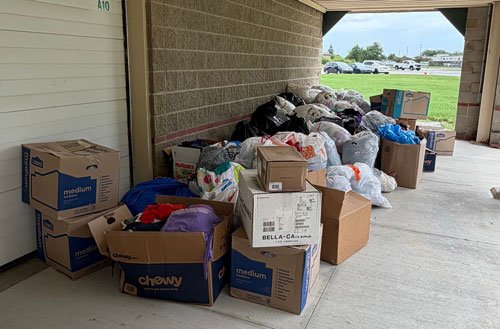
Photo provided by Pooja Thakkar
This is also what inclusive communities can learn from Takiwatanga.
We often expect people to move at the pace of the majority … to speak quickly, respond immediately, participate visibly, and recover according to a timeline we create for them.
But people are not timelines. People are journeys.
The child who needs more time to participate. The neighbor who needs more time to process. The family that needs more time to rebuild. The person who is ready to help today and the person who needs help today.
All of them belong.
Perhaps the most powerful question we can ask isn’t, “Why aren’t you there yet?” It is, “Where are you right now, and how can I meet you there?”
As Noblesville moves through this difficult time, may we continue to be a community that doesn’t rush people through their experiences.
May we give people the time and space to find solutions, one step at a time, while also making sure they never have to take those steps alone.
Because community isn’t just about showing up when everything is put back together.
Community is showing up while people are putting the pieces back together.
Takiwatanga teaches us that there can be dignity in moving at our own pace.
Belonging teaches us something more:
Whatever your pace, there should always be a community willing to walk beside you.
And perhaps that is how we grow – not just as individuals, but together.
Pooja Thakkar is working to build cultural connections. You can read her column each week in the pages of The Reporter.