
By WYNNE BRUBAKER
news@readthereporter.com
You might not think the garden you’ve been growing in your backyard could be what introduces you to a new community, but the Hamilton County Master Gardeners Association (HCMGA) says otherwise. The organization is helping our county redefine gardening as more than just a backyard hobby: it is also a way to bring people together while benefitting our environment.
HCMGA President Bruce Reed spoke to The Reporter about what it means to be a Master Gardener, the organization’s mission, and how you can get involved.

Reed
“To become a master gardener, you attend classes through the Purdue extension,” Reed said. “It is a series of 15 classes and 40 hours of instruction. At the end of that time, you become certified as a master gardener.”
Following the initial Purdue course, members must continue to receive at least 12 hours of education and 12 volunteering hours each year. Given that HCGMA’s primary goal is to educate the public about gardening, continuing education is especially important.
“Our goal is to educate the public so the public knows the correct way to not only grow, but to deal with the issues that you have when you’re gardening,” Reed said. “You’re always going to have something that needs attention to save the crop that you’re growing. Whether that’s flowers or whether that’s vegetables, whatever you’re growing, there are going to be issues. So, educating the public on how to deal with those issues and – more importantly – how to go research those issues and know where to find the information that they need to keep their plants healthy is very important.”
To support education, HCMGA teaches students of all ages about topics ranging from composting to treating insects without using damaging chemicals in numerous events throughout the year.
“We typically have different ways of engaging the public in the science of gardening,” Reed told The Reporter. “We hold education classes within our gardens, we do education in the high schools and fifth grade classrooms. We also provide education in 55 and older communities and hold classes in the public libraries in Hamilton County.”
HCMGA supports Hamilton County residents and gives back to the community.
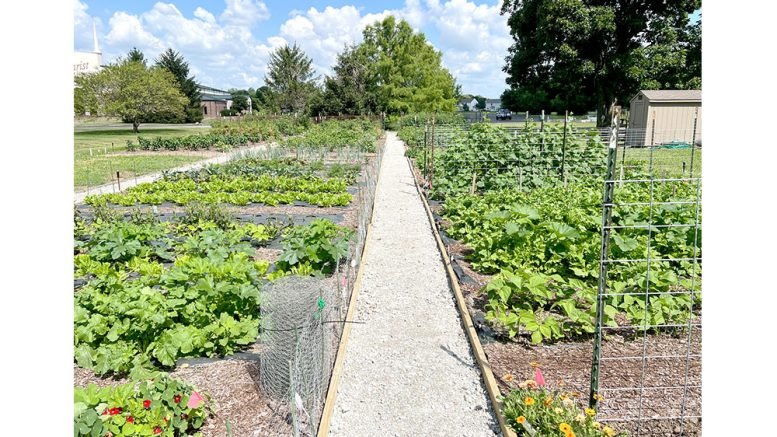
The organization owns two separate vegetable beds for gardening lessons that produce almost 5,000 pounds of food that goes to the local food pantries each year.
“That’s something I’m pretty proud of that we did,” Reed said. “That’s really good for the longevity of the organization so that we can make sure Hamilton County Master Gardeners is around for future generations.”
Similarly, HCGMA contributes to the education of college students through the annual distribution of seven $3,000 scholarships for horticulture students. The result is not only opportunities for students to access valuable gardening education, but it also creates a culture of care and community among master gardeners.
“The students are very appreciative of our efforts to help them financially with their education,” Reed said.
The organization’s positive impacts on Hamilton County people and the environment are abundant, but HCGMA also significantly benefits its own members through providing purpose, connection, and an outlet for passion.
“Gardeners are just good people,” Reed said. “They like to garden and they enjoy the social aspect of being part of the organization. And I think there’s a new sense of needing to know how to grow your own food and raise your own food, for your own consumption. I think that’s causing people to want to join the organization. People look at our food supply and they say, ‘Maybe we should think about being able to grow our own food.’”
Gardening can be a physically taxing activity, but that does not stop HCGMA from including members who can no longer contribute physically. They created the Helping Hands Committee, composed of members who can no longer physically garden, but still want to stay a part of the group.
“They are a tremendous support to our committees,” Reed said. “That has caused a lot of our members who would probably drop out of the organization to continue to maintain their membership because they’re still an active part of the organization.”
HCGMA builds lifelong connections as well as strengthens internal passions and personal growth. For Reed, becoming president of the organization was a good way to use his hobby to give back.
“I’ve been a vegetable garden gardener since I was probably 10 years old, and I’ve always loved growing,” Reed said. “My wife and I are both master gardeners, and we decided that after the kids were all gone and out of the house and having their own families, we would like to take the class and become master gardeners. So that’s what we did. It’s something that we do together, as a couple, which is really nice.”
 Even if you are not interested in investing the time it takes to become a Master Gardener, Reed recommended donating the food you are growing in your garden to a local food pantry and maintaining the green spaces that surround us.
Being a vegetable gardener can be so much more than just a chore, it can also be a source of community and purpose.
To learn more about Master Gardeners or to sign up for the Purdue course, visit HCMGA.org.
Additional information: Hamilton County Master Gardeners has 412 members and provides over 25,000 volunteer hours across Hamilton County. You can donate to HCMGA at HCMGA.org and click on Donate.