
By STU CLAMPITT
news@readthereporter.com
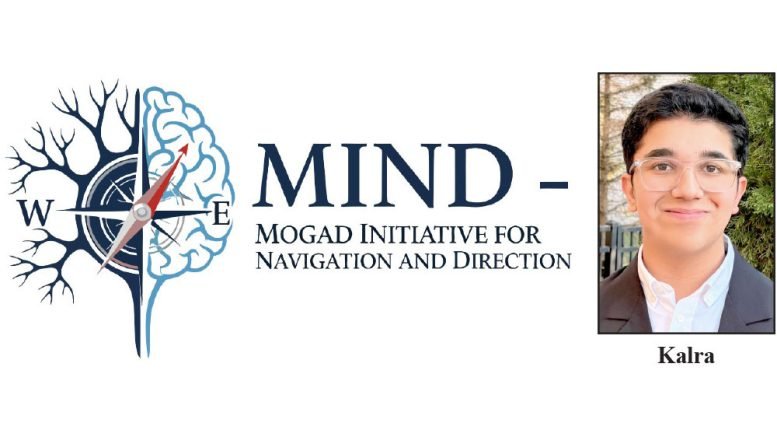
Myelin oligodendrocyte glycoprotein antibody-associated disease (MOGAD) is a rare neurological condition where the immune system mistakenly attacks a protein called MOG. Carmel High School freshman Ayan Kalra was diagnosed with MOGAD and has since founded MIND (the MOGAD Initiative for Navigation and Direction) to raise awareness about MOGAD and, perhaps, help others avoid the long period of uncertainty and countless tests it took to diagnose his own condition.
“I formed MIND within these last seven months, and it was after I was diagnosed with a rare disease called MOGAD,” Kalra told The Reporter. “When I was 12 years old, I was diagnosed with that disease. I was in the hospital, and I was so clueless because I didn’t know what was happening to me. I was getting this diagnosis with a disease that I couldn’t even pronounce, and I sort of witnessed firsthand the lack of accessible information on the internet.”
Even Kalra’s parents, both physicians, struggled to find reliable information about MOGAD.
“They spent hours on the internet just trying to comprehend what was happening to me and they just spent so much time looking for resources and trying to paint a picture on the disease and how it was affecting me,” Kalra said. “Sitting in a hospital bed like that, hooked up to an IV bag, I was getting treatment for a disease that I didn’t know anything about. I decided that I needed to do something help other people because I realized that there were over 300,000 families in the world who were facing MOGAD and experiencing the disease.”
Kalra’s organization, MIND, appears to be the world’s first organization for MOGAD that offers easy to understand information for both patients and families dealing with the disease.
“I created 3D models to help bridge this gap and just to help families and patients understand what they’re experiencing,” Kalra said.
He has also spent a great deal of time turning complex medical terminology into easy-to-understand information for patients and their families.
For Kalra, diagnosis was a long and painful process.
“It took them a while because basically they took a sample known as the cerebrospinal fluid sample from my spine, which was done through a lumbar puncture,” Kalra said. “It took them a while because they didn’t really know what they were testing for. I suddenly lost vision in my left eye and they didn’t know what to test for. So they tested like everything that was possible for the labs and sent it across the country to the Mayo Clinic in San Francisco. They were just trying to find what is happening to me.”
After sending samples to labs across the country, it was a week or more until his doctors were able to diagnose that he had antibodies in that were attacking his nervous system.
Kalra’s response to all that was to find a way to help others in his situation understand more than he did.
His website, mogad.net, is the resource he wished he’d had when he needed it. He has built an informative and easy to navigate website with a little assistance from a few free programs and some light editing from a couple AI tools.
“I did everything myself, yes, Kalra said. “I just wanted some sort of visualization for the patients so they could sort of see what was happening instead of just reading all these key studies. So alongside making the terminology simpler, I wanted them to have a visual understanding. So I created a 3D model myself using just platforms that help piece together and just create a simple model using just simple things like just shapes representing antibodies and nerves, just to create a picture that was easy to understand and was accurate.”
He spent time reading case studies and summarizing them in non-medical language. His use of AI technology in that process was limited, and what you will find on his website is his own work.
“I read all these case studies that are currently on the website,” Kalra said. “I read them and I formulated my own type of summary, and I told an AI to make it so that it’s more organized and to add more simpler terminology so that it’s easy for patients to read and understand in an organized fashion. I wanted to use modern technology, but also have my own voice because it’s also my personal story and it’s my mission and my drive to create this organization.”
While this project is Kalra’s passion, it is far from his entire self-definition.
“I am a part of my school’s marching band, so I play the trumpet and I enjoy performing in that collective initiative,” Kalra said. “I am also a part of my school’s HOSA club [Health Occupations of Students of America] so that I can engage in and just learn more about medical medicine as that is a career I want to pursue in the future. I am also a part of my school’s speech and debate club, and I am the current president and founder of my school’s Scrabble club.”
As this is being written, Kalra’s website has been live for just over 30 days and has already reached people spread across North America, Europe, Asia, and Africa.
“All these countries and continents are where people view my website and are currently looking at it and understanding the disease,” Kalra said. “People from 10 countries have seen it.”
When asked how our readers can help, Kalra had very easy options.
“My suggestion is to share my website with anyone, regardless of if they have MOGAD, just to raise awareness,” Kalra said.
He also suggested donating money to hospitals researching rare diseases and rare neurological conditions.
Awareness and research are key.
You can visit the MOGAD Initiative for Navigation and Direction online at mogad.net.